
By Conor Byrne
For 2½ years, I worked in wealth management.
Every day, I helped people build their financial nest egg. The advice was simple. Start early. Invest consistently. Let compounding do the heavy lifting.
And it works. I watched people follow that advice for decades and arrive at retirement with more money than they would ever spend.
But there was one thought I could never shake.
Everyone knows someone who worked for forty years. They did everything right. Saved. Invested. Paid off the mortgage. Built the pension. Finally retired.
Six months later, a diagnosis that money can't fix.
They had invested in one future. But maybe neglected the other.
The cruel irony is that some people spend forty years earning the freedom they've always wanted, only to discover their body can't enjoy it. Decades of contributions to one asset. Not a single deposit in the other.
That thought never left me. It's one of the reasons I'm so passionate about what we're building at NestEgg.
02 · Two nest eggs, same rules
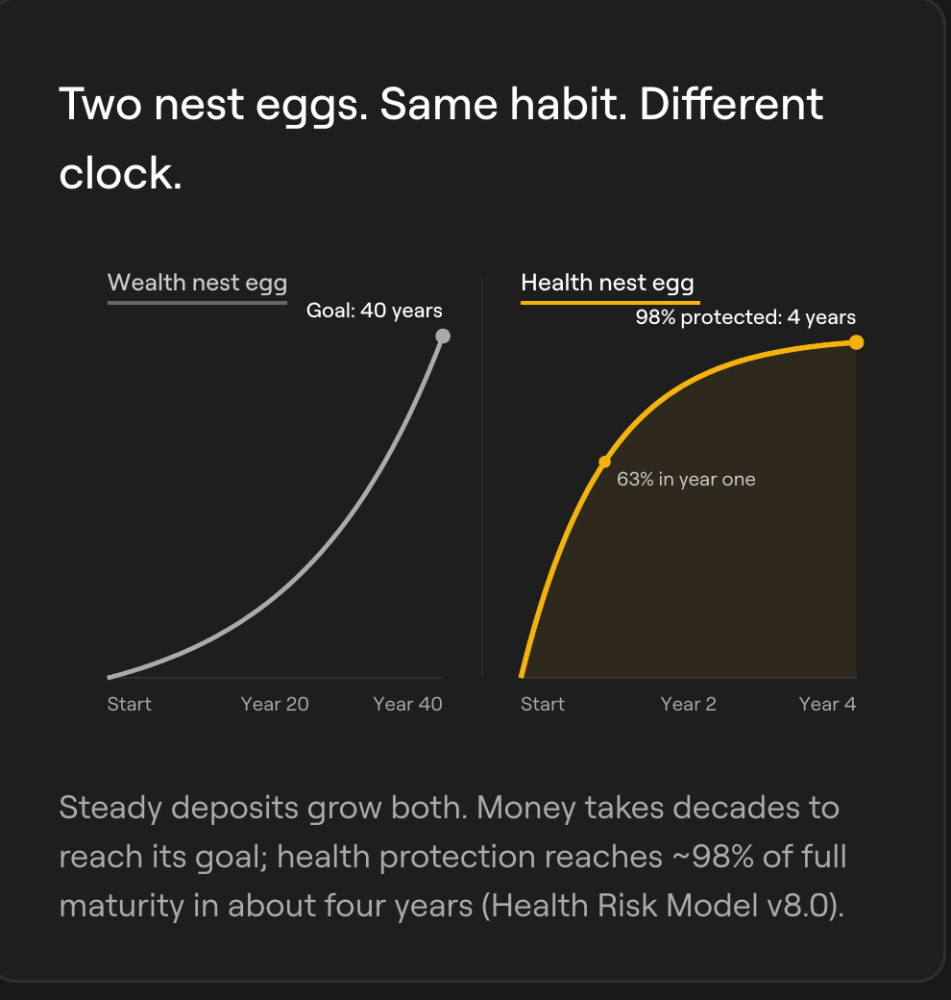
Here is what surprised me most when I moved from finance to health: the rules are identical.
Your health compounds, exactly like money does.
The deposit is different. It isn't a monthly contribution. It's a walk. A workout. A exercise class. In the research, the most accessible deposit level is 150 minutes of moderate exercise plus two strength sessions a week. Consistent deposits at that level are associated with a 41% lower risk of all-cause mortality, based on studies following over 661,000 adults for 14 years.
And the catch is the sameevery financial advisor knows: there are no lump sums. You cannot cram a decade of health into the year before retirement, the same way you cannot fund a pension in your final twelve months of work. The only strategy that works is the boring one. Start early. Deposit consistently. Let it compound.
03 · The better clock
But here is where the health nest egg beats the financial one, and it isn't close.
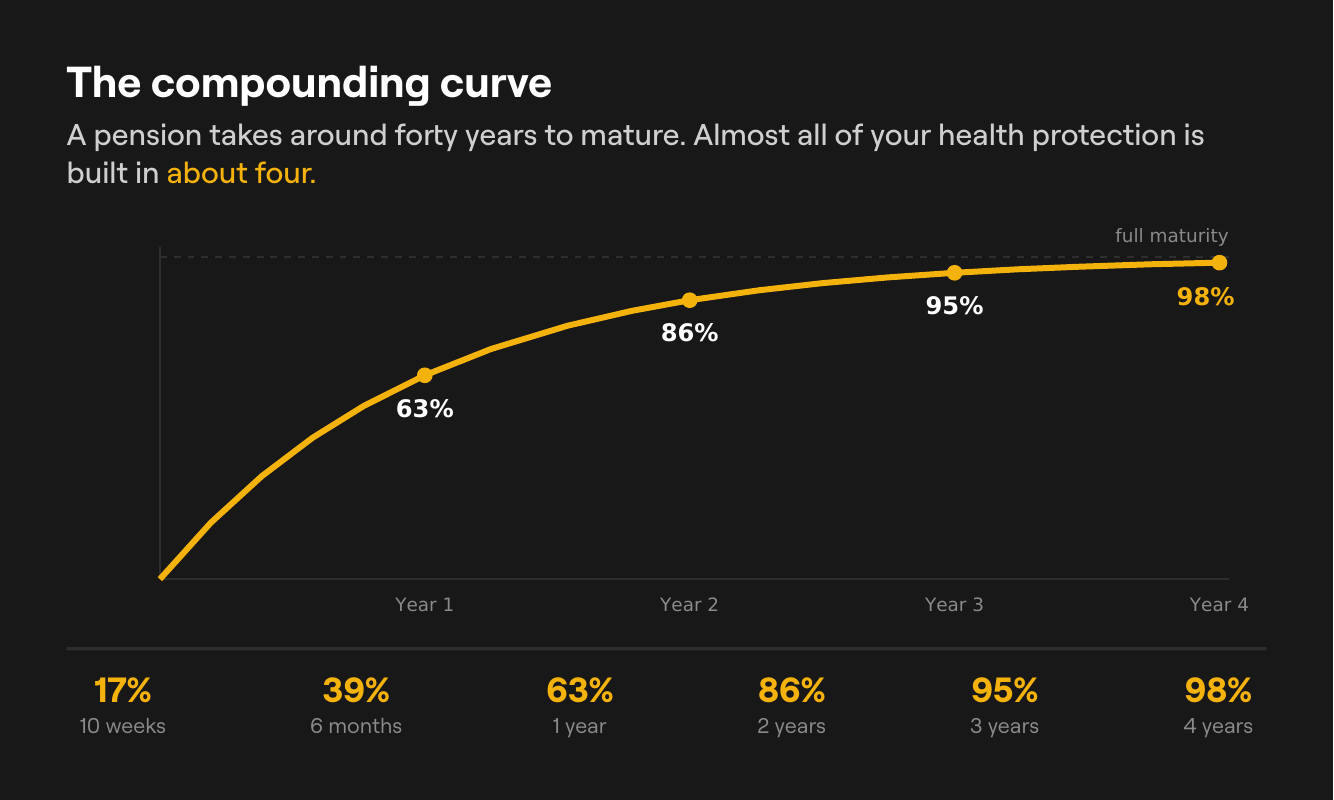
A pension takes around forty years to mature.
Your health protection takes about four.
The curve is steep exactly where you want it to be: roughly 63% of the protection is built in the first year of consistent deposits, and nearly all of it, about 98%, within four years. Whether someone starts at 30 or at 55, the first year does most of the work.
I spent years telling clients that time in the market beats timing the market. The health version is better news than anything I ever got to say about money: it is probably the highest returning investment most people will ever make, and it matures in a fraction of the time.
04 · So why doesn't everyone do it?
This is the part I care about most, because the answer isn't what most people think.
The science around exercise has been there for years. The hard part has never been knowing what to do. It's building an environment where people actually keep doing it.
Most people don't stop exercising because they lack motivation. They stop because they exercise alone.
We count two kinds of capital: financial and health. There is a third. Social capital is what funds the Health. Gym memberships, fitness apps, and wearables all sell movement. Almost nobody builds the community that makes movement consistent.
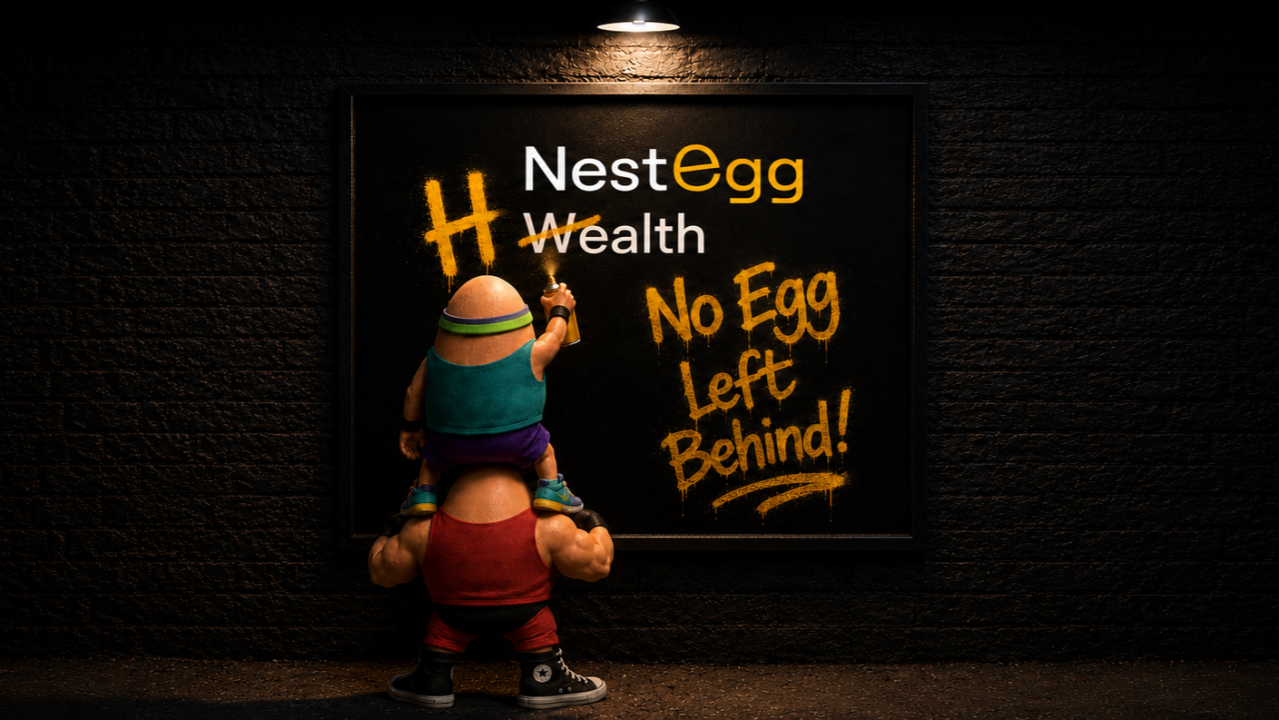
That is what we're building at NestEgg: exercise communities in the workplace, where colleagues make their weekly deposits together, and where the least active person is the one the whole thing is designed around. We have one rule. No Egg Left Behind.
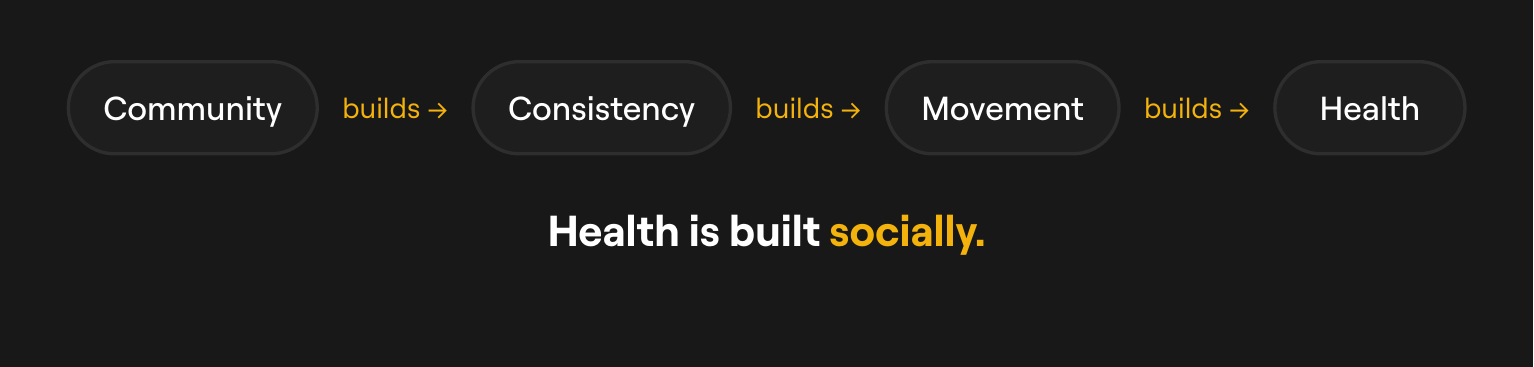
Community builds consistency. Consistency builds movement. Movement builds health.
Health is built socially.
05 · A question for the people who build nest eggs for a living
If you work in wealth management, you have seen the story in section one more times than I have. You've also seen the other version: the client who retired healthy and got twenty-five great years out of the nest egg you built together. The difference between those two retirements was almost never the portfolio.
We spend decades, and entire industries, getting the first nest egg right.
So the question I keep coming back to is a simple one.
Who builds the second one for your people?
Not because the world needs another wellness programme. But because everyone has two nest eggs.
One gives you the freedom to retire.
The other determines whether you can enjoy it.